Welcome to Hebei Kangzhou Environmental Protection Equipment Co., Ltd!


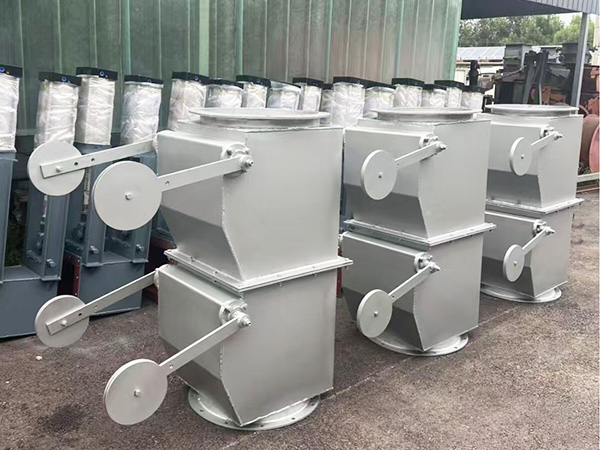
A Flap Valve,also known as a flap gate or flapper check valve,is a simple and reliable one-way isolation valve.It features a hinged flap(or disc)as the core closing component,designed to allow fluid or gas to flow in a single direction while effectively preventing backflow.With its compact structure,no external power requirement,and low maintenance cost,it is widely applied in various industrial,municipal,and environmental engineering scenarios,playing a crucial role in protecting pipeline systems and equipment from damage caused by reverse flow.
Working Principle
The operation of a flap valve relies entirely on the pressure difference of the medium itself or the weight of the flap,without the need for additional electric,pneumatic,or hydraulic actuators—making it energy-saving and easy to operate.When the medium flows in the forward direction,its pressure pushes the hinged flap open,creating an unobstructed flow channel for smooth circulation.When the medium stops flowing or attempts to flow backward,the flap automatically closes under the combined action of reverse medium pressure and its own weight,tightly adhering to the valve seat to form a reliable seal,thereby preventing backflow and avoiding pipeline vibration,equipment damage,or system disorder caused by water hammer effect.
Main Types
Flap valves are classified into various types based on installation orientation,structural design,and actuation mode to adapt to different application scenarios:
-Horizontal Flap Valve:The valve seat is installed horizontally,matching horizontal pipelines.It is the most commonly used type,with the flap hinged on one side,suitable for wastewater systems,irrigation networks,and water supply pipelines.
-Vertical Flap Valve:The valve seat is perpendicular to the pipeline,installed vertically.It requires less fluid pressure to open,making it ideal for pump suction lines,sewage systems,and chemical processing pipelines.
-Dual Flap Valve:Equipped with two symmetrically hinged flaps,it can sense pressure differences on both sides of the valve,enabling faster closure,reducing water hammer,and providing redundancy(if one flap fails,the other can still prevent backflow).It is widely used in power plants,oil and gas pipelines,and water distribution systems.
-Spring-Loaded Flap Valve:A small spring is installed behind the flap to ensure rapid closure even in vertical installations or low-pressure systems.The spring force is calibrated to be overcome by forward flow but strong enough to close the flap reliably,suitable for automotive fuel systems,hydraulic circuits,and compressed air lines.
-Duckbill Flap Valve:A specialized type with a flexible,duckbill-shaped elastomeric tube replacing the traditional flap.It is highly sealed and suitable for sewage lift stations,stormwater systems,and marine bilge pumps to prevent backflow of contaminated water or seawater.
Key Features
-Reliable Backflow Prevention:The core function of"one-way conduction and reverse cut-off"effectively blocks backflow,protecting pumps,pipelines,and equipment from damage caused by reverse medium impact.
-Energy-Saving&Automatic Operation:No external power is required;the valve opens and closes automatically relying on medium pressure and flap weight,reducing operation and maintenance costs,especially suitable for remote,outdoor,or unattended scenarios.
-Compact Structure&Easy Installation:Simple design,small volume,lightweight,and easy to install on pipelines or equipment outlets.It can be installed in horizontal or vertical orientations according to on-site needs.
-Low Maintenance&Long Service Life:Fewer moving parts,simple structure,and wear-resistant materials reduce maintenance frequency.The valve body and flap are made of high-strength materials,ensuring corrosion resistance and long service life.
-Good Sealing Performance:Adopts EPDM,NBR,PTFE,or rubber seals(metal seals for high-temperature scenarios),achieving bubble-tight shutoff and preventing medium leakage and dust or air leakage in bulk material systems.
-Wide Adaptability:Suitable for various media(water,sewage,sludge,oil,gas,powder,granular materials)and harsh working conditions,with a wide range of temperature and pressure adaptability.
Both stainless steel and carbon steel screw conveyors have their own advantages, and the better choice depends on working conditions, material properties and budget. Carbon steel screw conveyor is low ...
Yes, screw conveyors are highly suitable for conveying powder materials such as cement, fly ash, flour, limestone powder, chemical powder and feed powder. The fully enclosed tubular and U-trough screw ...
Screw conveyor blade wear is a common fault caused by long-term friction with abrasive materials such as sand, cement, ore and grain. Timely repair can avoid material blocking, reduced conveying capaci...
Regular maintenance is essential to extend the service life and ensure stable operation of a screw conveyor. First, conduct daily inspection. Check for abnormal noise, vibration, oil leakage and materi...
Contacts:Mr Liu
Phone:8613013227238
E-mail: info@hebeikangzhou.com
Add:Feng Sanfan Village, Siying Township, Botou City, Cangzhou City, Hebei Province, China
Kangzhou Environmental Protection adheres to technology as the core, quality as the guarantee, and service as the support, continuously providing customers with efficient and reliable environmental governance solutions
Copyright © 2026-2027 https://www.dustcollectoraccessories.com. All Rights Reserved Hebei Kangzhou Environmental Protection Equipment Co., Ltd Copyright




 TAG
TAG